

Corn Dog Nutrition: Balancing Indulgence with Health
Remember the last time you were at a fair or carnival? The smell of fried food made your mouth water. Biting into a warm, crispy corn dog was a highlight. It brought back happy memories.
But let’s look at the corn dog nutrition information behind this tasty treat. Knowing the corn dog calories helps you make better choices. This guide will reveal the truth about corn dogs, including calories, health benefits, and risks. Plus, we’ll explore healthy corn dog options you might not know about.
Key Takeaways
- Corn dogs are typically 330 kcal per 100 g.
- They contain 24 g of carbohydrates and 9 g of protein per 100 g.
- High in sodium with 572 mg per 100 g, corn dogs can influence dietary intake.
- Understanding nutritional facts helps in making healthier snack choices.
- Frozen corn dogs can last up to six months if stored properly.
- Leftover corn dogs can be repurposed in creative dishes for added variety.

Introduction to Corn Dogs
Corn dogs are a big hit in American street food and are loved at fairs and carnivals. Their corn dog history goes back to the 1940s, with a story that’s not fully known. They’re made by wrapping a hot dog in cornmeal batter and frying it until golden.
But corn dogs are more than just food. They bring back memories and hold cultural value in American cuisine. People love them at festivals, enjoying their warm, tasty goodness. Today, there are over 100 kinds of corn dogs out there.
At outdoor events, corn dogs are a favorite. They’re easy to find and bring happiness to everyone who tries them. So, corn dogs will keep being a favorite in America’s food scene.

Corn Dog Nutrition Information
Corn dogs are a favorite snack at fairs and festivals. Knowing their nutritional value helps us make better food choices. Each corn dog has a mix of nutrients, which can change based on ingredients.
Understanding Nutritional Value
It’s key to look at the nutritional value of corn dogs. They are made from a hot dog in batter, deep-fried. This makes them high in calories and fats.
A breakdown shows corn dogs have about 330 calories for every 100 grams. They have around 9 grams of protein and 21 grams of total fat, including saturated fats. This shows why watching portion sizes is important for diet goals.
Standard Serving Size and Calories
The usual serving size of corn dogs is one to two units, each about 100 grams. For example, two corn dogs have about 660 calories. Knowing your serving size helps manage calories.
If you aim for a balanced diet, knowing the nutritional value and calories in corn dogs is key. It helps you make better food choices.
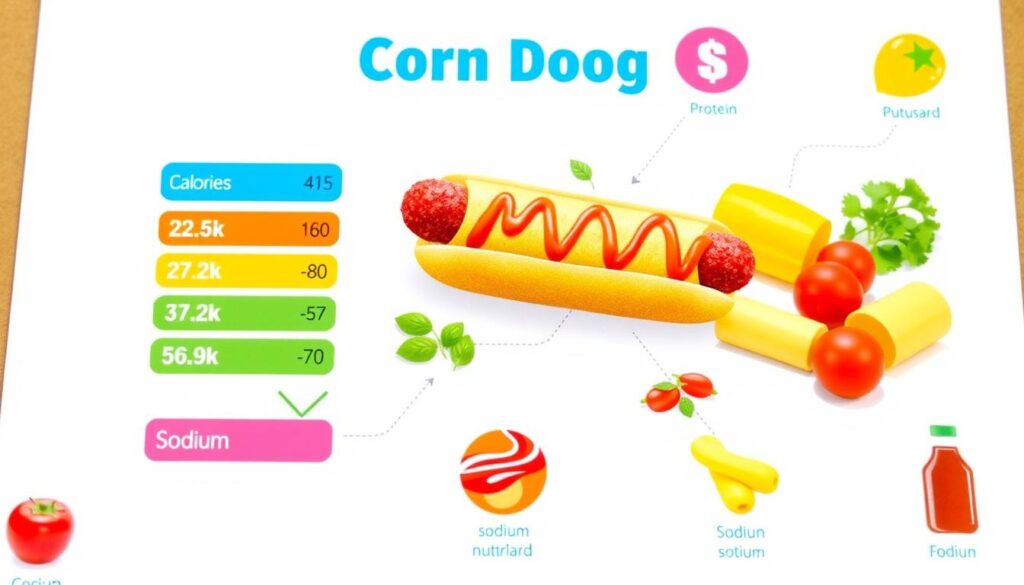
| Nutritional Component | Per 100g |
|---|---|
| Calories | 330 |
| Protein | 9g |
| Total Fat | 21g |
| Saturated Fat | 4g |
Key Nutritional Facts of Corn Dogs
Corn dogs are a hit at fairs and events because of their tasty mix of flavors and textures. Knowing the nutritional facts of corn dogs helps you decide if they fit into your diet. This section looks at calories, macronutrients, and vitamins in corn dogs. It aims to give you a clear idea of what you’re eating.
Calories in Corn Dogs
A standard corn dog has about 150 to 300 calories. This depends on the recipe and ingredients. For example, a typical corn dog has 280-320 calories. Fried corn dogs usually have more calories than baked or air-fried ones.
Macronutrient Breakdown
The macronutrients in corn dogs are key to understanding their nutritional value. Here’s what you can expect in one corn dog:
| Macronutrient | Amount per Serving |
|---|---|
| Carbohydrates | 28-34 grams |
| Protein | 6-15 grams |
| Fat | 10-20 grams |
| Sodium | 500-800 milligrams |
| Dietary Fiber | 1-2 grams |
Corn dogs are a good source of carbs and protein. But, they are also high in sodium and fat. This is important to think about when planning your meals.
Vitamins and Minerals
Corn dogs also have vitamins and minerals that add to their nutritional value. They contain:
- Vitamin A
- B complex vitamins
- Vitamin E
They also have iron and calcium. Iron is about 4% to 15% of the Daily Value per serving. Calcium is important for bone health.
Ingredients in Corn Dogs
Corn dogs are a favorite snack at fairs and sports games. Knowing what’s in them helps you make better food choices. They have a hot dog inside, covered in a thick cornmeal batter. This mix gives them a special taste and texture.
Main Components
The hot dog inside is made of beef, pork, or chicken, with added seasonings. The cornmeal batter adds a crunchy texture. It’s made from cornmeal, flour, eggs, and milk. Brands use certain ratios to keep the taste the same.
Common Additives
It’s important to know what’s added to corn dogs. Many have preservatives to last longer, flavor enhancers for taste, and fillers that can change quality. Always check the ingredient list when picking a corn dog.
Health Benefits of Corn Dogs
Corn dogs might not be the first thing you think of when you hear “health food.” But, they have some benefits that can fit into a healthy diet. They are a good source of protein, with about 8 grams in each corn dog. This protein helps repair muscles and supports the body’s functions.
They also offer a quick energy boost, thanks to their carbs. With about 28 grams of carbs, they’re a favorite for those needing a quick pick-me-up. Choosing baked or air-fried corn dogs can also reduce calories and fats. This way, you can enjoy their tasty flavor without feeling guilty.
Traditional corn dogs have around 280-320 calories and 18 grams of fat. But, there are healthier options out there. You can find corn dogs made with turkey or chicken and even ones with whole-grain or veggie breading. These changes make for a lighter, yet satisfying snack.
- Convenient protein source
- Quick energy snack due to high carbohydrates
- Healthier versions available for reduced calories and fats
In moderation, corn dogs can be a tasty and healthy part of your meals. They offer both flavor and nutritional benefits.
Health Risks Associated with Corn Dogs
Enjoying corn dogs can come with health risks. Two main concerns are the sodium content and the saturated fats in fried foods.
High Sodium Content
Corn dogs have a lot of sodium, more than what’s safe to eat every day. This is bad news for people with high blood pressure. Too much sodium can make blood pressure go up, leading to heart disease and stroke.
Saturated Fats and Cholesterol Concerns
The saturated fats in corn dogs are also a problem. They can raise cholesterol levels and increase the risk of heart disease. It’s important to think about these risks when eating corn dogs.
| Health Risk | Details |
|---|---|
| Sodium Content | Often exceeds daily recommended limits; can raise blood pressure. |
| Saturated Fats | Linked to higher cholesterol and heart disease risk. |
Healthy Corn Dog Options
Craving corn dogs but want to stay healthy? You can make choices that support a healthy lifestyle. Opt for options that are good for you, so you can enjoy the taste without worrying about calories or fat. Now, you can have your favorite corn dog and stick to your diet goals.
Lower Calorie Alternatives
Looking for corn dogs with fewer calories? Try baked or air-fried ones. These methods use less fat and calories than deep-frying. For example, a regular corn dog has 280-320 calories. But air-fried ones taste just as good with fewer calories.
Brands like Impossible make corn dogs with 290 calories per serving. This is much lower than many other options.
Whole Grain and Lean Protein Variations
Whole-grain corn dogs are a healthier choice. They have more fiber and nutrients than regular ones. Many options use whole grain flour or lean proteins like turkey or plant-based alternatives.
For example, Impossible corn dogs have 9 grams of protein per serving. This is more than the 4 to 7 grams in animal-based corn dogs. These choices are not only tasty but also support a healthier diet.
| Type of Corn Dog | Calories | Total Fat | Protein |
|---|---|---|---|
| Impossible Corn Dog | 290 | 15g | 9g |
| Traditional Corn Dog | 280-320 | 10-18g | 8g |
| Baked Corn Dog | Varies | Lower than fried | Dependent on recipe |
| Air-Fried Corn Dog | Varies | Lower than fried | Dependent on recipe |
Nutritional Comparison with Other Snacks
When looking at different snacks, it’s key to see how corn dogs compare to hot dogs and fair foods. This comparison shows their calorie, fat, and nutritional values. Knowing this helps you pick snacks that fit your diet.
Corn Dogs vs. Hot Dogs
Corn dogs have more calories than hot dogs. A corn dog has about 220 calories, while a hot dog has 150. Corn dogs also have 11g of fat, compared to hot dogs’ 6g. Yet, corn dogs might be more satisfying, even with more calories and fat.
Corn Dogs vs. Other Fair Foods
Compared to other fair foods, corn dogs are not the healthiest. For example, a funnel cake has over 300 calories and lots of sugar. Corn dogs, on the other hand, have 5g of protein per serving. This comparison helps you make better choices for your diet.
| Snack | Calories | Fat (g) | Protein (g) | Sodium (mg) |
|---|---|---|---|---|
| Corn Dog | 220 | 11 | 5 | 430 |
| Hot Dog | 150 | 6 | 6 | 400 |
| Funnel Cake | 300 | 18 | 4 | 200 |
Knowing these differences is important for making choices that fit your health goals. Enjoying your favorite snacks, like corn dogs, is easier when you understand their nutritional values.
How to Choose Quality Corn Dogs
Choosing corn dogs is more than just picking the first one you see. Look for quality ingredients to improve your experience. A good corn dog has a smooth, even coating. Avoid any that look cracked or soggy.
The appearance shows how well they were made and the ingredients used.
Identifying Good Ingredients
It’s important to check the ingredients. Choose corn dogs with real hot dogs, not processed ones. Look for whole grain batter and few artificial additives. This ensures better taste and nutrition.
Remember, you want to enjoy a tasty snack without harming your health.
Cooking and Preparation Tips
Cooking corn dogs right can make them taste better and be healthier. Try baking or air frying instead of frying. If you do fry, use oil at 350-375 degrees F.
Cook them for 2-3 minutes for a crispy outside. Following these tips can make your corn dogs healthier and tastier.
Storage Tips for Corn Dogs
Storing corn dogs right is key to keeping their taste and quality. You can refrigerate or freeze them, but follow certain steps to keep them fresh. Here are some tips to help your corn dogs last longer.
Refrigeration vs. Freezing
Refrigeration and freezing can make corn dogs last longer. In the fridge, they can stay good for 3-5 days. Keep them in an airtight container or wrap them well in plastic or foil.
If you freeze them, they can last up to 2 months. Cool them down first, then put them in a freezer-safe bag.
How Long Do They Last?
Cooked corn dogs should be eaten within 1-2 days in the fridge. Keep them at 40°F (4°C) or lower. Check for signs of spoilage like color changes, bad smells, or a slimy feel.
For frozen corn dogs, reheat them safely. Bake at 300°F for 15 minutes or microwave for 60 seconds. This makes them hot and safe to eat, keeping their flavor and texture great.
Creative Ways to Use Leftover Corn Dogs
Leftover corn dogs can turn into tasty meals that surprise you. Creative ways to use corn dogs reduce waste and add variety to your meals. From casseroles to breakfast, these ideas will inspire you to use leftover corn dogs in new ways.
Recipes Incorporating Corn Dogs
- Corn Dog Muffins: These mini muffins are delightful and easy to make, perfect for brunch or as a snack. Each serving contains around 76 calories. Prepare by mixing 3/4 cup cornmeal, 3/4 cup gluten-free flour, 1/4 cup sweetener, baking powder, salt, milk, olive oil, an egg, and hot dog pieces. Bake at 375°F for 10-14 minutes.
- Corn Dog Casserole: Combine leftover corn dogs with scrambled eggs, cheese, and your favorite vegetables for a hearty casserole. Bake until golden and bubbly for a satisfying meal.
- Breakfast Scramble: Chop leftover corn dogs and mix them with eggs, vegetables, and cheese for a filling breakfast scramble. Quick to make, this dish is perfect to start your day.
Tasty Additions to Meals
Your meals can take a unique twist with leftover corn dogs. Toss chopped corn dogs into salads for a crunchy protein boost, or slice them up to create delightful sandwiches. Think about pairing them with sauces or toppings for added flavor.
These meals with corn dogs are not only efficient but also exciting, revealing the versatility of corn dogs in various culinary applications. With just a little creativity, your leftovers can become new family favorites.
| Recipe | Calories per Serving | Total Time (minutes) | Yield |
|---|---|---|---|
| Mini Corn Dog Muffins | 76 kcal | 27 | 34 muffins |
| Corn Dog Casserole | Approx. 300 kcal | 45 | 8 servings |
| Breakfast Scramble | Approx. 250 kcal | 15 | 2 servings |
Diet-Friendly Corn Dog Recipes
Looking for ways to enjoy corn dogs without compromising on health? Diet-friendly corn dog recipes are here to help. They use lean proteins, whole grains, and smart cooking methods. This way, you can keep calories low while enjoying every bite.
Chicken sausages are a great choice for a protein-packed corn dog. Each mini corn dog has about 115 calories. They also have 13 grams of protein and just 1 gram of carbs. This makes them perfect for those who love healthy recipes but don’t want to sacrifice taste.
Want to make your corn dogs even healthier? Try using almond flour instead of wheat flour. It’s gluten-free and supports low-carb diets. Adding unflavored protein powder boosts the nutritional value, making your meal both tasty and good for you.
For a crispy outside without extra oil, try air frying or baking. Air frying at 400°F for 10-12 minutes gives a great crunch. Baking at 375°F for 20-25 minutes ensures even cooking. These methods help you make corn dogs that are low in calories but full of flavor.
- Mini Corn Dog Recipe:
Using chicken sausages and almond flour to create a lower-calorie version without sacrificing taste. - Keto Corn Dogs:
Made with fathead dough, which consists of mozzarella cheese, cream cheese, and eggs, resulting in a low-carb delight.
These diet-friendly corn dog recipes and tweaks let you enjoy your favorite treats while staying healthy. Get creative in the kitchen and try out these delicious and nutritious options.
Conclusion
Enjoying corn dogs can be part of a balanced diet if done right. The corn dog nutrition summary gives us key info on calories, nutrients, and vitamins. This helps us make better food choices.
While corn dogs are tasty, it’s important to eat them in moderation. Knowing the health risks and benefits helps us make better choices. There are lighter and alternative options that let us enjoy corn dogs without sacrificing nutrition.
Being mindful of corn dog nutrition is key. Whether at a fair or a cozy gathering, enjoying corn dogs can be great. Just remember to do it in a way that’s both tasty and informed.
FAQ
What is the caloric content of corn dogs?
A typical corn dog has about 330 calories per 100 grams.
Are there healthier options for corn dogs?
Yes, you can try baked or air-fried corn dogs. They use whole grain flours and lean proteins. This reduces calories and boosts nutritional value.
What ingredients are typically found in corn dogs?
Corn dogs usually have a hot dog in a cornmeal batter. They might also have preservatives, flavor enhancers, and fillers.
How can corn dogs fit into a healthy diet?
Corn dogs can be part of a healthy diet if eaten in moderation. They offer protein and quick energy. Choosing healthier cooking methods helps too.
What are the health risks associated with eating corn dogs?
Corn dogs are high in sodium, saturated fats, and cholesterol. Eating them often can harm heart health.
How long can you store cooked corn dogs?
Cooked corn dogs can stay in the fridge for 1-2 days. They can last up to 1-2 months in the freezer.
Are there creative recipes for using leftover corn dogs?
Yes, you can make corn dog casseroles, and breakfast scrambles, or add them to salads or sandwiches. These are great for new meal ideas.
What are some diet-friendly recipes for corn dogs?
Diet-friendly corn dog recipes use lean proteins and whole grains. They also use baking or grilling to cut calories without losing flavor.
Get Pawfeast in your inbox!
Stay informed! Get tips and exclusive Recipes.